The 2026 winners of the Martirano Memorial Award offer insight into their compositions, inspiration, and musical journeys.
The 2026 winners of the Martirano Memorial Award share their musical journeys and offer insight into what they aspired to achieve through their compositions.
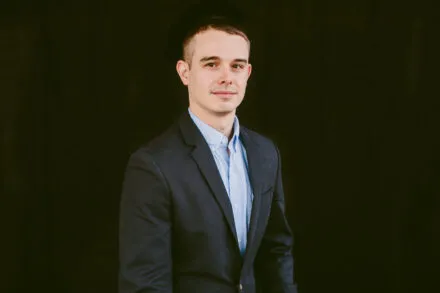
Andrew Davis
First Prize:
Andrew Davis (he/him) is a composer, pianist, and electric guitarist from Columbia, MD. Davis’ early experiences in music were in local concert bands where he played trombone and in rock bands where he played electric guitar. Fused with a strong background in popular music, his music seeks to explore a variety of different genres and musical aesthetics.
His works have been performed nationally and internationally by groups such as the JACK Quartet, PRISM Quartet, Alarm Will Sound, Daedalus Quartet, ETHEL Quartet, the Argento Ensemble, loadbang, the Boston New Music Initiative, the Luna Nova Ensemble, Blueshift Ensemble, Variant 6, the Florida State Wind Ensemble, and the University of Texas New Music Ensemble. He has received honors from ASCAP and BMI, among others. Additionally, his music has been heard at a variety of festivals, including the International Computer Music Conference, SEAMUS, TUTTI Festival, RED NOTE Music Festival, Mizzou New Music International Composers Festival, New Music on the Point, NYCEMF, and the Atlantic Music Festival. He has held residencies at Atlantic Center for the Arts and ACRE.
His recent output has focused on works for string quartet and solo piano that have been presented across the United States, including at the Music Mountain Summer Festival, Wooster Chamber Music Series, New York Festival of Song, Avaloch Farm Music Institute, Mt. Desert Festival of Chamber Music, Raritan River Music Series, and Music at Evergreen.
He holds music degrees from Yale University (B.A), the University of Texas at Austin (MM), and the University of Pennsylvania (PhD), as well as an M.S. in computer science from Stanford University. He is currently an Assistant Professor in Music at Ursinus College, where he directs the music technology program and teaches additional classes in composition, songwriting, and music theory.
Deep Summer Folklore(2023)
I wrote Deep Summer Folklore over the summer of 2023 for my friends in the Daedalus Quartet. At the time, I had been thinking about the relationship between instruments and genre. What kind of music do we hear when we think of a particular instrument? Something like the oboe feels firmly rooted in Classical music, for instance. But string instruments, especially the violin, occupy several spaces. The violin has an incredibly rich history in Classical music, but it is also an important folk instrument and has crossed over into other genres such as blues, hip hop, and rock. This piece draws on the stylistic eclecticism of string instruments, incorporating elements from various musical genres. The folk and rock influences are quite strong and overt, and several of the parts were originally written for electric guitar. These varied elements all coalesce – hopefully – to form a driving and effervescent piece that goes through various distinct but related sections. I am incredibly thankful to the Daedalus Quartet, whose thoughtful consideration and comments helped bring this piece to life.
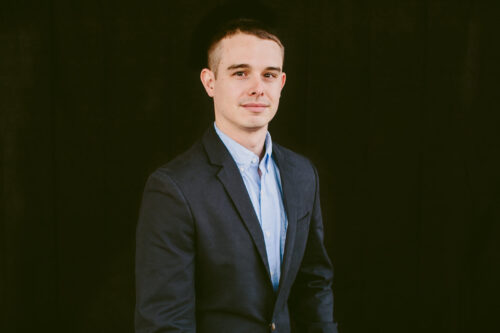

Yike Zhang
Second Prize:
Yike Zhang (she/her)(b. 1993, Wuhan, China) is a composer active in New York and Toronto. From an early age, she was drawn to two worlds: Western classical music and Chinese Buddhism, and her music synthesizes these influences.
Her music has been performed across the world, including at the Asian Classical Music Initiative Conference, the Graduate Center of the City University of New York, the MISE-EN Festival, the Atlantic Music Festival, the University of Toronto New Music Festival, Orford Musique, the Chinese University of Hong Kong, the China Conservatory of Music, Wuhan Qintai Concert Hall, and Columbia University, where she premiered three site-specific works for St. Paul’s Chapel. She has served as Artist-in-Residence at Arts Letters & Numbers, been commissioned by White Snake Projects, and has given guest lectures at the CUNY Graduate Center and South China Normal University. Her music is featured on the Society of Music Theory Podcast.
She received her BM from the Wuhan Conservatory of Music, MM from the Manhattan School of Music, and her DMA from the University of Toronto. She teaches music theory at the Manhattan School of Music summer program. In the 2026–27 season, the Toronto Symphony Orchestra will premiere her new commissioned work.
Three Flows in Quartet (2023)
Three Flows in Quartet was commissioned in 2023 by Rebecca Moranis and Joseph Vaz for their concert Living New York. I composed the piece in the late summer, when I spent most of my time in the sunshine in Brooklyn. I tried to capture the pure relaxed feeling. The piece, which is sixteen minutes, has three movements, like three diary entries. Each movement has a static texture and slow development.

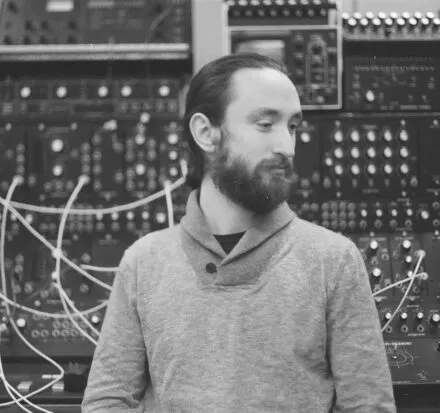
Nathaniel Haering
Third Prize:
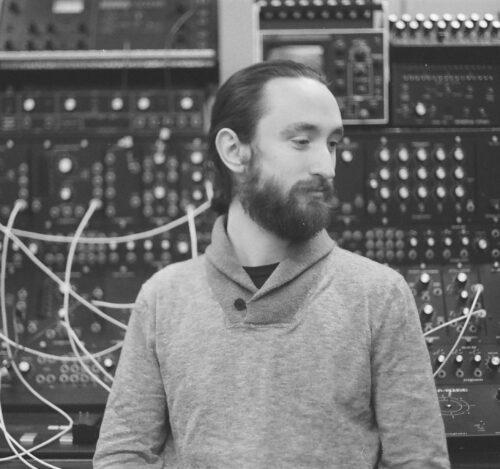
Nathaniel Haering (he/him)(b. 1994) is deeply interested in the use of live electronics to expand the artistic capabilities of traditional instruments and augment their timbral horizons while enriching their expressive and improvisational possibilities. This perspective is also highly influential and represented in the gestural power and extended sound worlds of his purely acoustic work.
He has collaborated with and had works performed by Grammy® Award-winning Vietnamese performer and composer Vân Ánh Võ, Trio Accanto, Ensemble Mise-En, in^set, Mivos Quartet, Wild Up, and members of WasteLAnd, Ensemble Ipse, Ensemble Dal Niente, the International Contemporary Ensemble, and the LA Phil. Winner of the 2019 ASCAP/SEAMUS Student Award, the 2019 PRIX CIME Residency Prize, and the Mixed Media Award of Distinction from MA/IN festival in Matera, Italy, Nathaniel’s work can be found on flux, vol. 33 as well as multiple volumes of Music from SEAMUS. His pieces have recently been featured at the International Computer Music Conference in Shanghai, Seoul, and NYC; the Toronto International Electroacoustic Symposium in Toronto; Noisefloor Festival at Staffordshire University, UK; VIPA in Valencia, Spain; WOCMAT in HsinChu City, Taiwan; SONIC MATTER in Zürich, Switzerland; and at numerous other international venues. Nathaniel completed a Ph.D. in Music Composition at the University of California San Diego and is a Lecturer in Composition & Technology and Theory at the University of Wisconsin – Milwaukee.
untitled (2023)
untitled is a work for amplified septet and live electronics and represents the first time I have ever felt that untitled was a compelling and fitting name for one of my works. Written for the 79th Annual Composers Conference for the 2023 Conference Ensemble with music director and conductor Vimbayi Kaziboni as part of being a 2023 Fromm Foundation Composer Fellow, this piece features a number of new approaches that I have not yet been able to fully name, label, or identify, and intentionally explores and interrogates nascent compositional strategies while simultaneously pushing more familiar techniques to their extremes. I am excited for listeners to engage with the work as it unfolds without the preconceptions imparted by a programmatic title.
Geli Li
Honorable Mention:
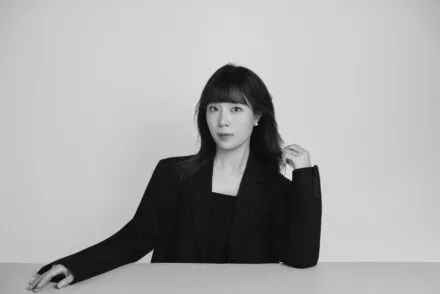
Geli Li (she/her)(b. 1992) is a Chinese-American composer whose musical journey spans Asia, Europe, and the United States. With over two decades of experience as a contemporary classical composer, she has cultivated a prolific portfolio spanning both acoustic and electronic media, advancing Eastern and Western musical traditions through a distinctive contemporary idiom. Her works have been performed by more than thirty leading ensembles and orchestras worldwide, including Talea Ensemble, Klangforum Wien, Alarm Will Sound, and Orchestra of St. Luke’s, among others.
Recognized with more than fifty honors and distinctions, her work has received awards including the Henri Lazarof International Commission Prize and the Luigi Nono International Composition Prize, and has been supported through fellowships, residencies, and commissions at the Gaudeamus Festival, the Fromm Foundation Composer Conference, the DeGaetano Composition Institute, Copland House, the Mizzou International Composers Festival, IRCAM’s ManiFeste, the Rodamúsic Composers Residency in Spain, and Intimacy of Creativity at the Hong Kong University of Science and Technology.
Her formal compositional training began at the age of twelve. From the Central Conservatory of Music in Beijing to the Hochschule für Musik und Theater Hamburg, and ultimately to the University of Texas at Austin, she pursued rigorous musical training across three continents. She completed her doctoral degree in Music Composition at the University of Texas at Austin, where her artistic development was enriched through mentorship from distinguished composers and educators, including Augusta Read Thomas, Yevgeniy Sharlat, Januibe Tejera, Elmar Lampson,QIN Wenchen, and others.
In addition to composing, Li has taught music composition, music theory, contemporary music, and general music education at the University of Texas at Austin and Macalester College.
Breath II (2021)
Breath II for string trio (2021) is the second piece in the BREATH series, in which I attempt to interpret and understand the word “breath” from different angles and contexts. In Breath II, I explored how a variety of breathing sounds could be produced by string instruments, and how these subtle, airy sounds could organically interact and combine in musical ways.
This piece is dedicated to the ensemble HANATSU miroir. The premiere was given by the ensemble on March 26, 2022, at the Emma S. Barrientos Mexican American Cultural Center in Austin. Additional performances were given by the Chartreuse Trio at the Women Composers Festival of Hartford at the Trinity College Grossman Music Center and at the UNK New Music Series and Festival in 2023. It was recorded by the Talea Ensemble in January 2024 in New York City.